

Moving home is often described as one of life’s most stressful events. When valuable wooden pieces are involved, that stress can increase considerably. Hardwood items are not only heavy and awkward to lift, but they are also prone to scratches, dents, moisture damage, and joint weakening if handled incorrectly. So, how can you ensure your prized furniture arrives at your new home in the same condition it left?
This guide explains the best methods to prepare, pack, and safeguard your wooden pieces before moving day, helping you avoid unnecessary repairs or replacements.
1. Prepare Each Piece Thoroughly
Before any packing materials are used, preparation is essential. Have you checked whether every surface is clean and dry?
Start by dusting and gently wiping down all furniture with a soft, lint-free cloth. Remove any residue from polishes or cleaners, as trapped moisture can cause staining when wrapped. This simple step is essential when moving furniture or preparing items for furniture delivery, as it helps prevent long-term surface damage. Allow pieces to dry fully before covering them.
If your furniture includes removable shelves, knobs, or legs, take them off and place them in clearly labelled bags. Keep these bags together in a single box so nothing is misplaced during transit, making reassembly after delivery quicker and more organised.
2. Use the Right Packing Materials
Not all packing supplies are created equal. Are you relying on flimsy materials that could fail mid-move?
Invest in quality materials such as:
- Furniture blankets or thick moving pads
- Bubble wrap for delicate or carved areas
- Corrugated cardboard sheets for flat surfaces
- Stretch wrap to secure padding
- Strong tape that won’t peel away under pressure
Avoid using newspaper directly against wood, as ink can transfer and cause permanent stains.
3. Wrap with Care and Precision
When wrapping, technique matters just as much as material. Why risk loose coverings that shift during transport?
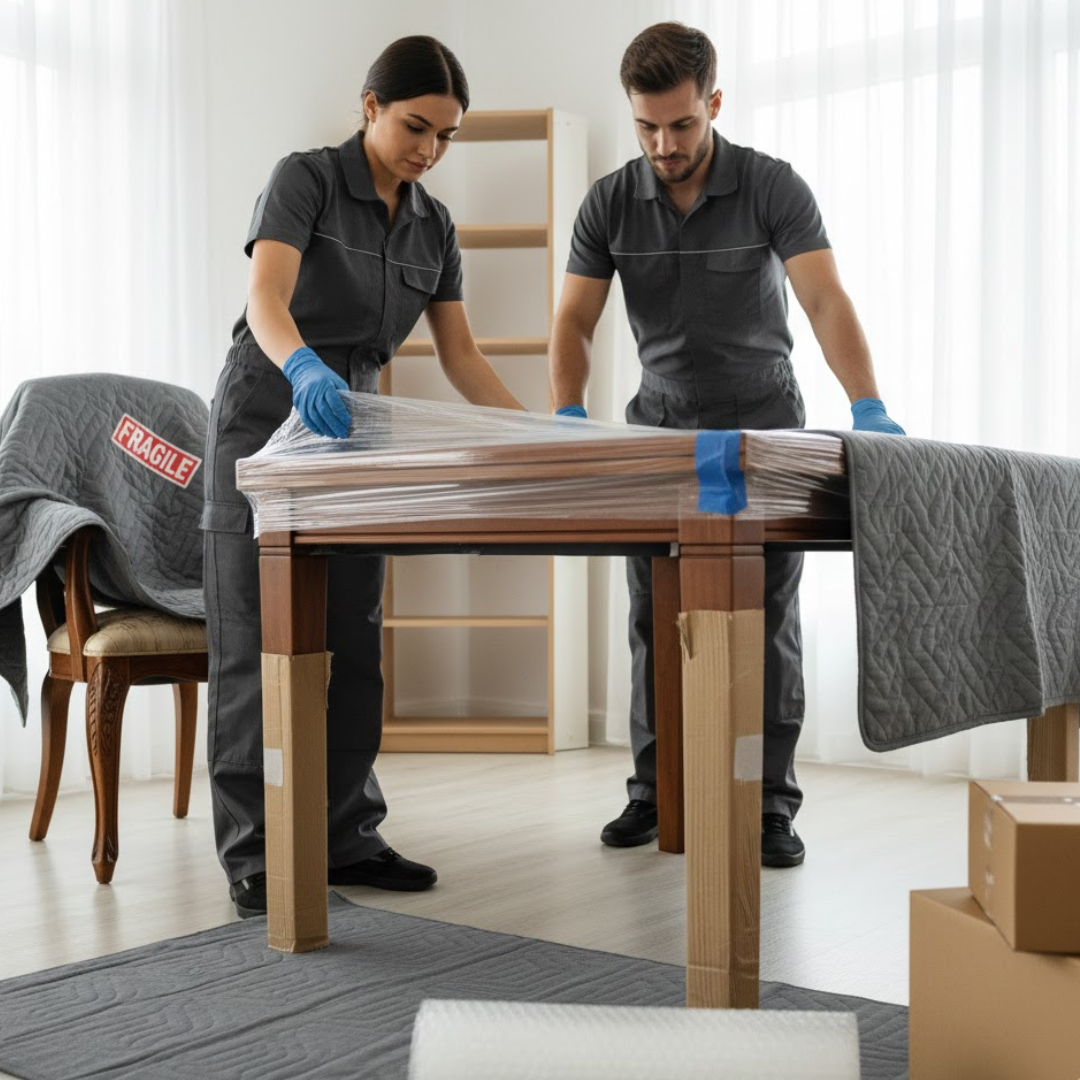
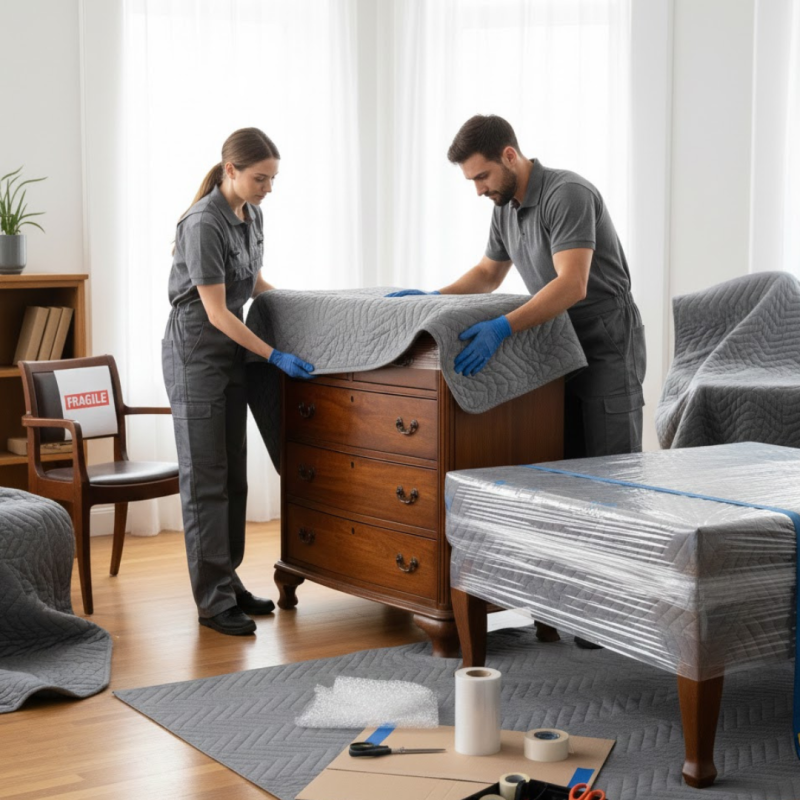
Begin with a layer of soft padding around the entire piece. For items with legs or arms, wrap these individually to prevent rubbing. Add a second layer using bubble wrap for corners and protruding details, securing it gently with stretch wrap or tape. Ensure the tape never touches the wood directly.
For tabletops and flat panels, place cardboard sheets over padded surfaces to create a firm barrier against pressure and impact.
4. Protect Against Moisture and Temperature Changes
Wood is sensitive to humidity and temperature swings. Could your furniture be exposed to damp conditions during the move?
Use plastic stretch wrap as an outer layer to protect against rain or condensation, but never seal damp furniture inside plastic. If your move involves storage, consider placing silica gel packs inside wrapped items to absorb excess moisture.
During colder months, allow furniture to acclimatise slowly once it reaches its new home to prevent cracking from sudden temperature changes.
5. Load Strategically in the Moving Vehicle
Even well-wrapped items can suffer damage if loaded incorrectly. Are heavy boxes stacked on top of fragile pieces?
Position larger wooden furniture upright against the walls of the truck and secure it with straps to prevent shifting. Place soft items such as mattresses or sofas between wooden pieces to act as buffers. Never stack heavy objects directly on top of wooden surfaces.
Ensure nothing sharp or metal is in direct contact with your furniture during transit.
6. Label and Communicate Clearly
Labelling boxes and wrapped furniture as “Fragile” or “Handle with Care” is not just for show. Are your movers aware of which items require extra attention?
Clear labelling helps everyone involved understand which pieces need gentle handling. If you are working with a professional team, communicate any special requirements in advance.
7. Consider Professional Assistance
Do you have particularly valuable or antique pieces that demand expert handling?
Engaging a reputable moving company can make a significant difference. Brocky’s Movers, for example, uses professional-grade materials and proven handling techniques to reduce the risk of damage. Their experience with delicate items means your wooden furniture is treated with the care it deserves.
You can learn more about their services at Brocky’s Movers.
8. Unwrap Carefully at Your New Home
The final stage is just as important as the first. Are you rushing to unpack everything at once?
Remove outer layers slowly and check for any signs of condensation. Wipe surfaces gently before placing items in their new positions. Reattach any removed parts only after the furniture has adjusted to room temperature.
Final Thoughts
Moving wooden furniture safely requires planning, patience, and the right materials. By cleaning thoroughly, wrapping carefully, and loading strategically, you can minimise the risk of scratches, dents, and moisture damage. Whether you choose to handle the move yourself or rely on professionals such as Brocky’s Movers, taking these steps will help ensure your belongings arrive in excellent condition.
After all, isn’t preserving the beauty and value of your furniture worth a little extra care?
FAQs
1. What is the safest material to wrap wooden furniture in?
Furniture blankets combined with bubble wrap for corners provide the best balance of cushioning and protection.
2. Should I dismantle my furniture before moving?
Yes, removing legs, shelves, or detachable parts reduces strain and prevents breakage during transit.
3. Can I use cling film directly on wood?
It is better to place a padded layer first, as direct plastic contact can trap moisture and damage the finish.
4. How do I prevent scratches during loading?
Position wooden pieces upright, secure them with straps, and place soft items between them as buffers.
5. Is hiring a professional mover worth it for wooden furniture?
Yes, experienced movers such as Brocky’s Movers use proper equipment and handling methods to minimise damage risk.