

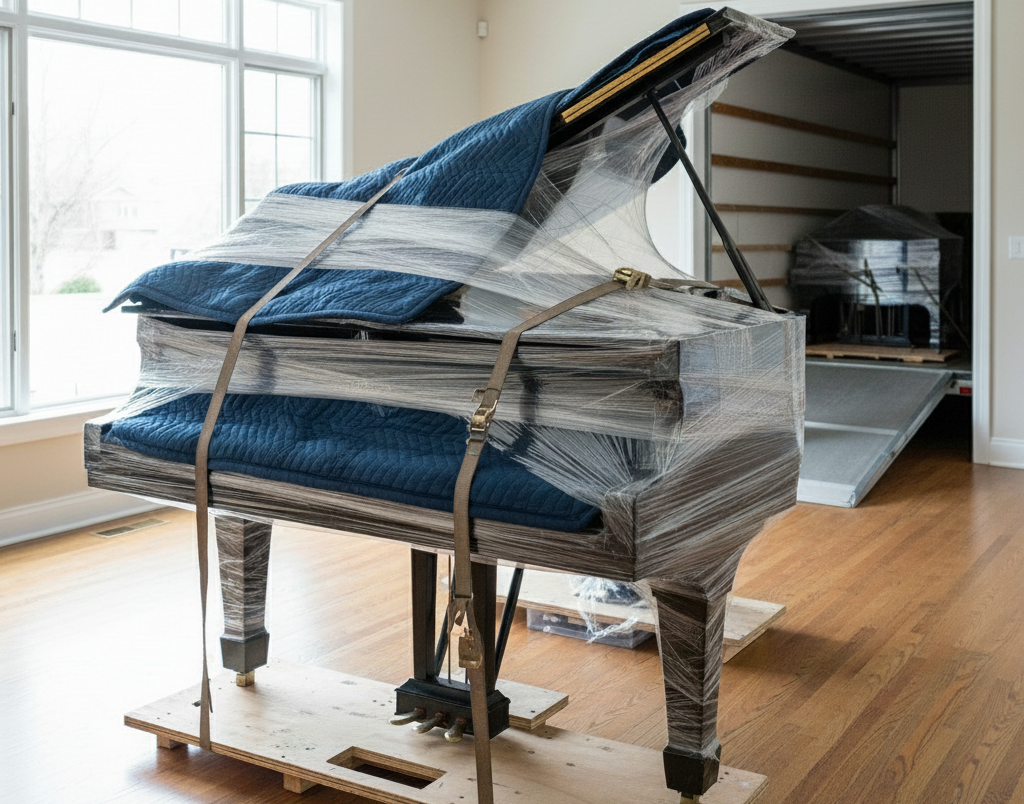
Preparing a piano for relocation requires careful planning to protect its structure, finish, and internal components during transit. This guide explains how to prepare your piano for a safe move, covering essential steps such as securing moving parts, protecting delicate surfaces, managing humidity, and choosing appropriate handling methods. Whether you own an upright or grand piano, understanding the risks of lifting, loading, and transporting helps reduce the risk of costly damage. These practical preparation tips help homeowners safeguard their instruments, maintain sound quality, and support a smoother moving process from start to finish.
Why Pianos Need Special Preparation Before Moving
Pianos are among the most difficult household items to relocate safely. Their size, weight, uneven balance, and sensitive internal mechanics make them vulnerable during even short-distance moves. Unlike standard furniture, pianos contain thousands of moving parts that respond to vibration, temperature change, and impact.
Failing to prepare properly can result in cracked casings, damaged keys, misaligned action mechanisms, or tuning instability. Preparation reduces movement inside the instrument and protects both its exterior and internal structure.
Identify Your Piano Type Before the Move
Preparation steps vary depending on the type of piano you own. Upright and grand pianos differ significantly in shape, weight distribution, and handling requirements.
Upright Pianos
Upright pianos are tall and narrow, with most of their weight concentrated toward the back. This makes them prone to tipping if not secured correctly.
Grand Pianos
Grand pianos require partial disassembly, including removal of legs and pedals. Their horizontal soundboard and extended frame demand precise padding and support.
Understanding your piano type helps determine the correct preparation and equipment needed for a safe move.
Secure and Protect All Moving Parts
Before moving day, all movable components should be secured to prevent internal damage.
Steps include:
- Closing and locking the keyboard lid (if available)
- Padding keys to prevent movement
- Wrapping pedals and lyre assemblies
- Using protective covers for exposed hinges
Specialised piano blankets and straps help hold everything in place during transport.
Protect the Piano’s Finish and Frame
Piano finishes are highly sensitive to scratches, pressure marks, and temperature changes. Polished wood, lacquer, and high-gloss surfaces require layered protection.
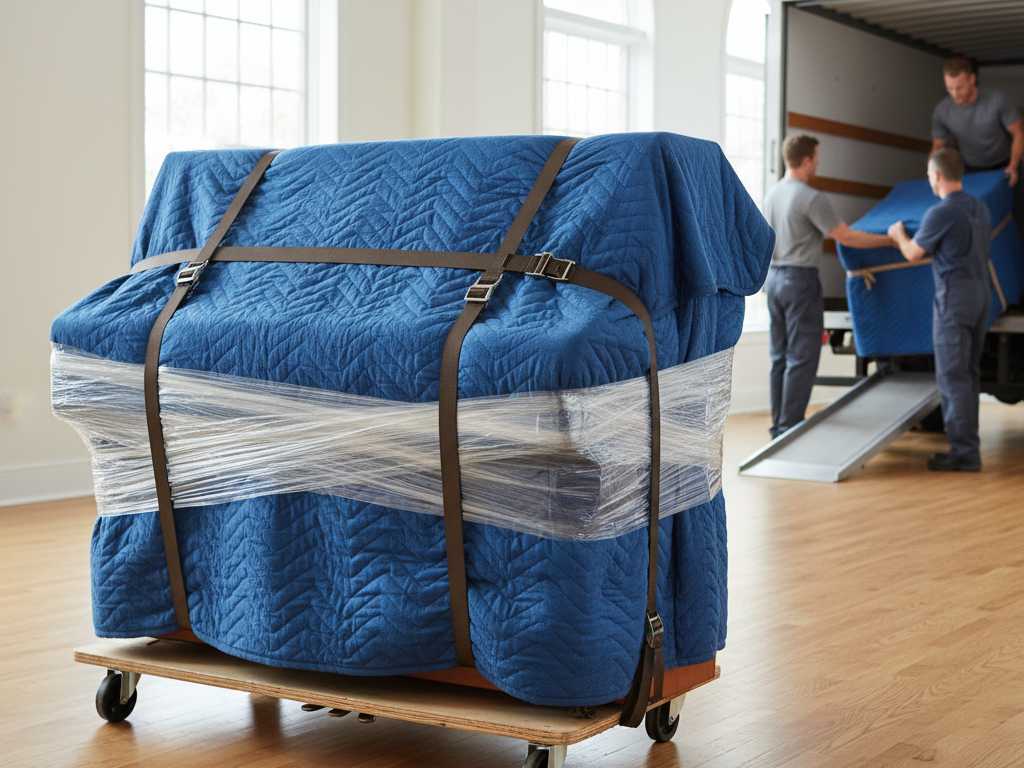
Use soft padding followed by stretch wrap to hold coverings in place. Avoid placing tape directly on finished surfaces, as adhesive residue can damage the coating.
Good Housekeeping outlines safe furniture handling practices that apply well to pianos.
Plan the Moving Path in Advance
Measure doorways, hallways, stairwells, and entry points before moving day. Tight corners and uneven surfaces increase the risk of impact damage.
Clear obstacles, secure rugs, and check flooring strength. For apartment buildings, confirm lift capacity and access timing to avoid rushed handling.
Manage Temperature and Humidity Exposure
Pianos are sensitive to environmental changes. Sudden temperature or humidity shifts can cause wood expansion, tuning drift, and soundboard stress.
Limit exposure time outdoors and avoid leaving the piano in hot trucks or damp conditions. Climate-related handling guidance is outlined by Energy.gov.
Use Proper Lifting and Transport Equipment
Standard dollies and straps are not designed for pianos. Specialised piano boards, skid boards, and heavy-duty straps distribute weight evenly and reduce strain.
Incorrect equipment increases the risk of drops, frame twisting, or floor damage. Professional movers rely on tools built specifically for heavy, unbalanced instruments.
Moving.com explains why specialised equipment is critical for large, heavy items.
Avoid Common DIY Moving Mistakes
Many piano damages occur during do-it-yourself moves. Common errors include:
- Lifting from weak structural points
- Tilting the piano too far
- Using insufficient padding
- Underestimating weight and balance
Even small mistakes can lead to permanent damage that affects sound quality and value.
When Professional Movers Make a Difference
Proper preparation is only effective when combined with skilled handling. Experienced movers understand how to stabilise weight, manage staircases, and protect instruments during loading and unloading.
If your move includes stairs, tight access, or long transport distances, professional assistance significantly reduces risk.
You can explore professional House Movers services.
Final Steps Before Moving Day
- Confirm access times and parking
- Check weather conditions
- Prepare protective materials in advance
- Communicate handling instructions clearly
These final checks support a smooth, controlled moving process.
Ready for a Safer Piano Move?
Preparing your piano properly helps protect its structure, sound, and long-term performance. From securing internal components to managing environmental exposure, each step reduces unnecessary risk.
For careful piano handling as part of a broader moving service, Contact Us to discuss your moving needs.
For trusted, professional moving support, visit Brocky’s Movers .
FAQs
1. Should a piano be tuned before or after moving?
Tuning should always be done after the move, once the piano has adjusted to its new environment.
2. Can I move a piano without professional help?
Small uprights may be moved short distances with care, but professional movers reduce damage risk significantly.
3. How long should a piano rest after moving?
Allow at least one to two weeks before tuning to stabilise temperature and humidity.
4. Is padding enough to protect a piano?
Padding helps, but correct lifting, securing, and transport methods are equally important.
5. Does moving affect piano sound quality?
Yes, vibration and climate changes can impact tuning and internal alignment.