

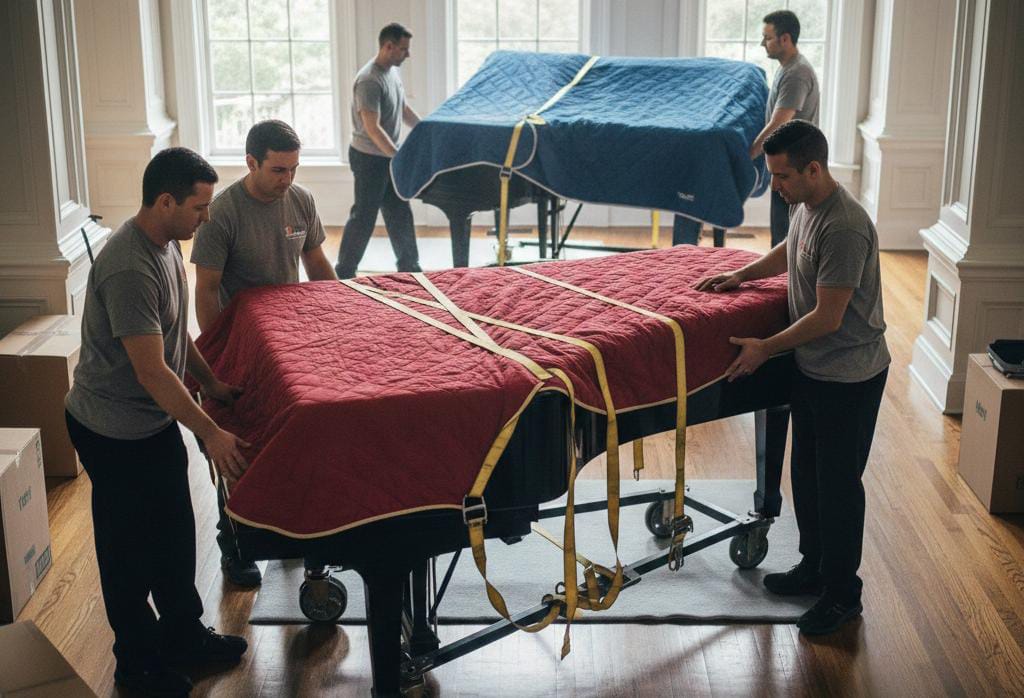
Moving a piano is not a one-size-fits-all task. Understanding what type of piano you own is essential before planning a move, as upright and grand pianos differ significantly in size, weight, balance, and structure. This guide explains upright vs grand moving tips, including preparation steps, handling differences, risks involved, and common mistakes to avoid. Whether relocating across town or within the same home, knowing how each piano type should be handled helps protect the instrument from damage and ensures a safer, smoother moving process.
Why Piano Type Matters When Moving
Pianos are among the heaviest and most delicate household items. They contain thousands of moving parts, sensitive soundboards, and precision-aligned components. Moving them incorrectly can lead to tuning issues, structural damage, or complete failure of internal mechanisms.
The approach used to move a piano depends heavily on whether it is an upright or a grand piano. Each design presents different challenges related to balance, weight distribution, and disassembly requirements.
Understanding Upright Pianos
Upright pianos are the most common type found in homes. They stand vertically and take up less floor space than grand pianos.
Common upright piano types
- Spinet
- Console
- Studio
- Professional upright
Weights typically range from 180 to 270 kg, depending on size and construction.
Upright Piano Moving Tips
While upright pianos are more compact, they are still extremely heavy and awkward to handle.
Key considerations
- Weight is concentrated toward the front
- Narrow depth increases tipping risk
- Internal components shift if tilted too far
Safe handling tips
- Keep the piano upright at all times
- Secure the keyboard lid
- Use heavy-duty piano dollies
- Protect corners with padding
- Avoid rolling on uneven surfaces
External moving guides such as Moving.com heavy furniture handling tips explain why balance control is critical for tall, narrow items like upright pianos..
Understanding Grand Pianos
Grand pianos are larger, heavier, and far more complex to move. They are designed horizontally, with strings and a soundboard spread across a wide frame.
Common grand piano types
- Baby grand
- Medium grand
- Parlor grand
- Concert grand
Weights often exceed 300 kg and are unevenly distributed.
Grand Piano Moving Tips
Moving a grand piano requires partial disassembly and precise coordination.

Unique challenges
- Long, uneven frame
- Delicate legs and pedals
- Sensitive soundboard orientation
Typical moving steps
- Remove legs carefully
- Detach pedal lyre
- Secure the lid
- Place piano on a skid board
- Transport horizontally
Improper handling can crack the soundboard or warp the frame, leading to costly repairs.
External references such as Good Housekeeping piano moving advice highlight the risks of moving grand pianos without proper support equipment.
Key Differences: Upright vs Grand Piano Moves
Understanding the differences helps set realistic expectations.
| Feature | Upright Piano | Grand Piano |
| Orientation | Vertical | Horizontal |
| Disassembly | Minimal | Required |
| Floor space | Compact | Large |
| Weight balance | Front-heavy | Uneven |
| Equipment needed | Dollies, straps | Skidboard, padding |
Both types require experience, but grand pianos require more preparation and pose greater risk.
Preparing Your Piano Before Moving
Preparation reduces the chance of damage.
Important steps
- Close and lock the keyboard lid
- Remove sheet music and accessories
- Measure doorways and hallways
- Clear paths of obstacles
- Inform movers of stairs or tight turns
Temperature changes during transport can also affect tuning, so timing matters.
Environmental Risks During a Move
Pianos are sensitive to environmental changes.
Common risks
- Humidity changes
- Temperature fluctuations
- Vibration during transport
- Sudden impacts
External guides such as Energy.gov household climate guidance explain how temperature and humidity affect wooden instruments.
DIY Piano Moving vs Professional Movers
Some homeowners consider moving a piano themselves, especially uprights. This often leads to damage or injury.
DIY risks
- Back and hand injuries
- Dropped instruments
- Broken legs or pedals
- Floor and wall damage
Professional movers use specialised equipment and trained teams to ensure safe handling of weight, balance, and movement.
For general moving knowledge (without service promotion)
When Professional Piano Moving Is Essential
Professional help is strongly recommended when:
- Moving a grand piano
- Navigating stairs
- Handling narrow hallways
- Transporting over long distances
- Protecting high-value instruments
Even upright pianos can pose a hazard without proper planning.
For broader moving requirements, this related internal resource may help:
After the Move: What to Expect
Once relocated, pianos often require:
- Rest time to adjust to the temperature
- Professional tuning
- Inspection for movement damage
It’s normal for tuning to shift slightly after relocation.
Final Thoughts & Professional Help
Knowing what type of piano you own plays a major role in planning a safe move. Upright and grand pianos each require specific handling techniques, equipment, and preparation. Rushing or underestimating the process often leads to costly damage or injury.
For safe, careful piano moving and house movers services, contact Brocky’s Movers today. Their experienced team provides reliable solutions designed to protect valuable furniture and instruments throughout the moving process.
FAQs
1. Is it easier to move an upright or grand piano?
Upright pianos are smaller, but both types require careful handling.
2. Can a piano be moved without disassembly?
Upright pianos can, grand pianos cannot.
3. How many people are needed to move a piano?
At least two for uprights; three or more for grands.
4. Will moving affect piano tuning?
Yes, tuning is often required after relocation.
5. Is piano insurance recommended during moving?
Yes, especially for high-value instruments.